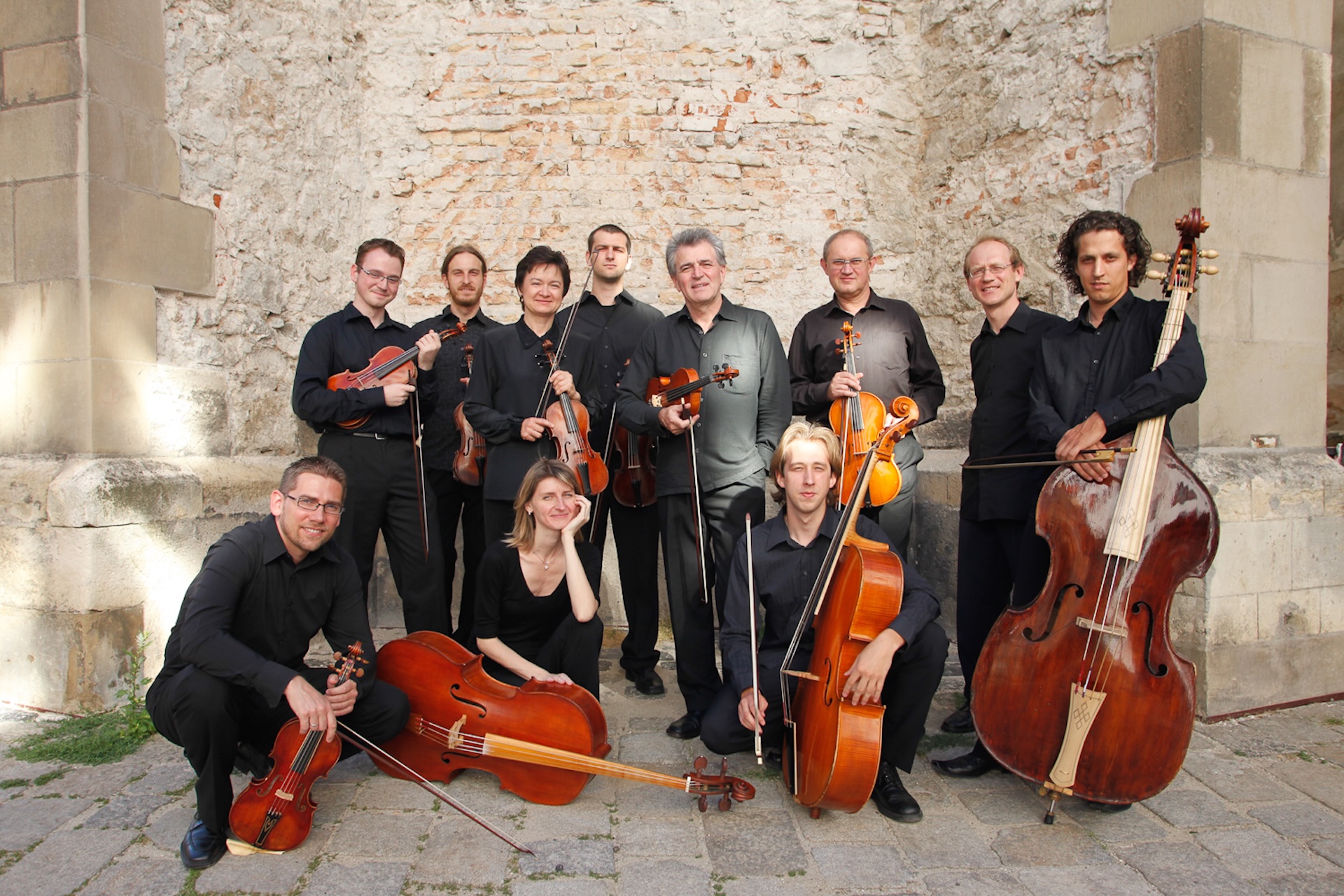
Musica Aeterna /SK/
MUSICA AETERNA is one of Slovakia’s leading early music ensembles. It was founded in 1973 at the initiative of Professor Ján Albrecht. Since 1989, the ensemble has performed on original instruments from the seventeenth and eighteenth centuries or on faithful replicas. Its repertoire focuses primarily on European music, with a particular emphasis on Central European and Slovak works of the seventeenth and eighteenth centuries. From 1986 until February 2005, Musica aeterna was affiliated with the Slovak Philharmonic. The ensemble’s artistic director is Peter Zajíček.
In addition to its extensive concert activities in Slovakia, Musica aeterna appears regularly on international stages. The ensemble has enjoyed a long-standing collaboration with the Centre de Musique Baroque de Versailles and has performed at numerous prestigious festivals, including Festival van Vlaanderen, the Utrecht Festival of Early Music, Festival Wiener Klassik, Régi Zenei Napok Sopron, the Prague International Festival of Early Music, Prague Spring International Music Festival, Bach-Tage Berlin, the Days of Early Music in Bratislava, the Bratislava Music Festival, the Swedish Baroque Festival in Malmö, Barockfest Münster, Festival de Sablé, as well as three concert tours of the United States, repeated engagements in Spain, and performances in Portugal, Argentina, and many other countries.
The ensemble has collaborated regularly with many of the world’s foremost specialists in historically informed performance, including Christophe Coin, Paul Colléaux, Paul Goodwin, Peter Harvey, Edward Higginbottom, John Holloway, Jan Kleinbussink, Catherine Mackintosh, Charles Medlam, Siegfried Pank, Andrew Parrott, Christoph Rousset, Simon Standage, Stephen Stubbs, Melvyn Tan, Olivier Schneebeli, John Toll, and many others.
Musica aeterna has released more than twenty-five recordings, several of which have received major international awards. These include the Diapason d’Or in 1994, 1995, and 2002 for its complete recording of Georg Muffat’s Concerti grossi, and the Classical Awards – MIDEM 2003 in Cannes in the category of seventeenth- and eighteenth-century vocal music for its recording of Jan Dismas Zelenka’s Sub olea pacis et palma virtutis.
In 2006, the ensemble received the Fra Angelico Award, presented by the Council of the Conference of Bishops of Slovakia, in recognition of its outstanding contribution to the promotion of Christian values through culture.
In 2025, following its performance at the Varaždin Baroque Evenings Festival, Musica aeterna was awarded the Jurica Murai Prize for Best Performance.
International critics have consistently praised the ensemble’s artistic achievements, ranking Musica aeterna among Europe’s finest early music ensembles.
___________
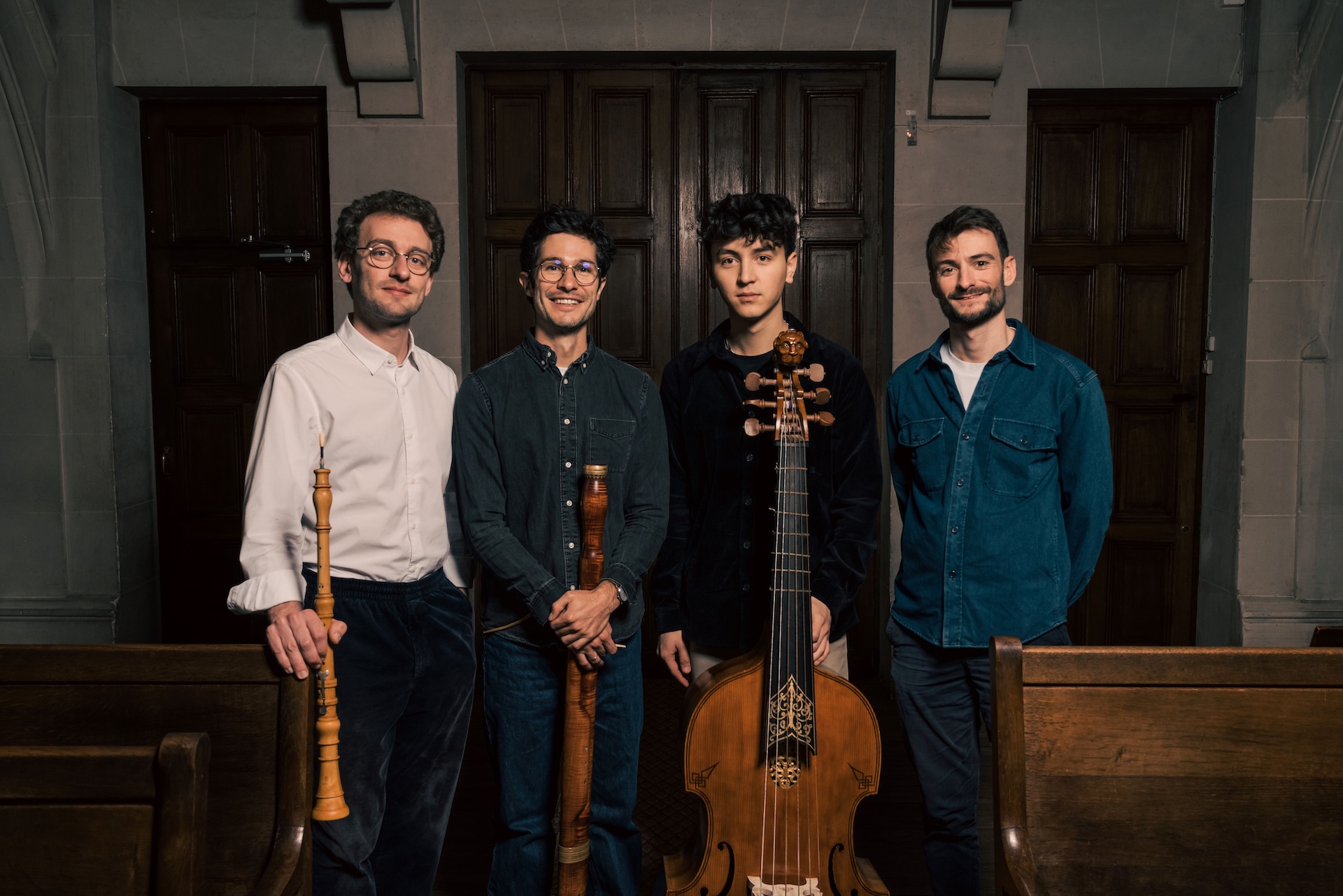
Le Chapitre /FR/
Founded by oboist Gabriel Pidoux, Le Chapitre is an ensemble of variable formation dedicated to exploring repertoire across the full spectrum, from period instruments to modern ones, with no aesthetic boundaries. Each project is conceived as a new chapter in an unfolding story: a blank page where music finds its shape, its tempo, its companions.
With Le Chapitre, Gabriel Pidoux extends an artistic journey shaped over a decade as co-founder of the ensemble Sarbacanes, and a solo career recognised in 2020 with the title of Révélation Soliste Instrumental at the Victoires de la Musique Classique. The ensemble is his space for creative freedom: to imagine programs, weave narratives, and bring musicians together around a shared intention.
The oboe is its natural thread: Gabriel Pidoux’s instrument, it runs through every programme and draws to it strings, voices, winds, whatever carries emotion. But Le Chapitre is, above all, a collective: a shared adventure.
Rooted in today’s cultural landscape, the ensemble pursues artistically ambitious projects designed to adapt to a wide range of contexts, from intimate chamber formats to operatic productions, as demonstrated in 2026 by its musical direction of Beethoven’s Fidelio, in a new arrangement for wind octet, produced with the Théâtre impérial de Compiègne.
Le Chapitre’s debut single, released in spring 2026 on the Oktav Records label, features Marcello’s Oboe Concerto and the Sinfonia from Bach’s Easter Oratorio.
___________
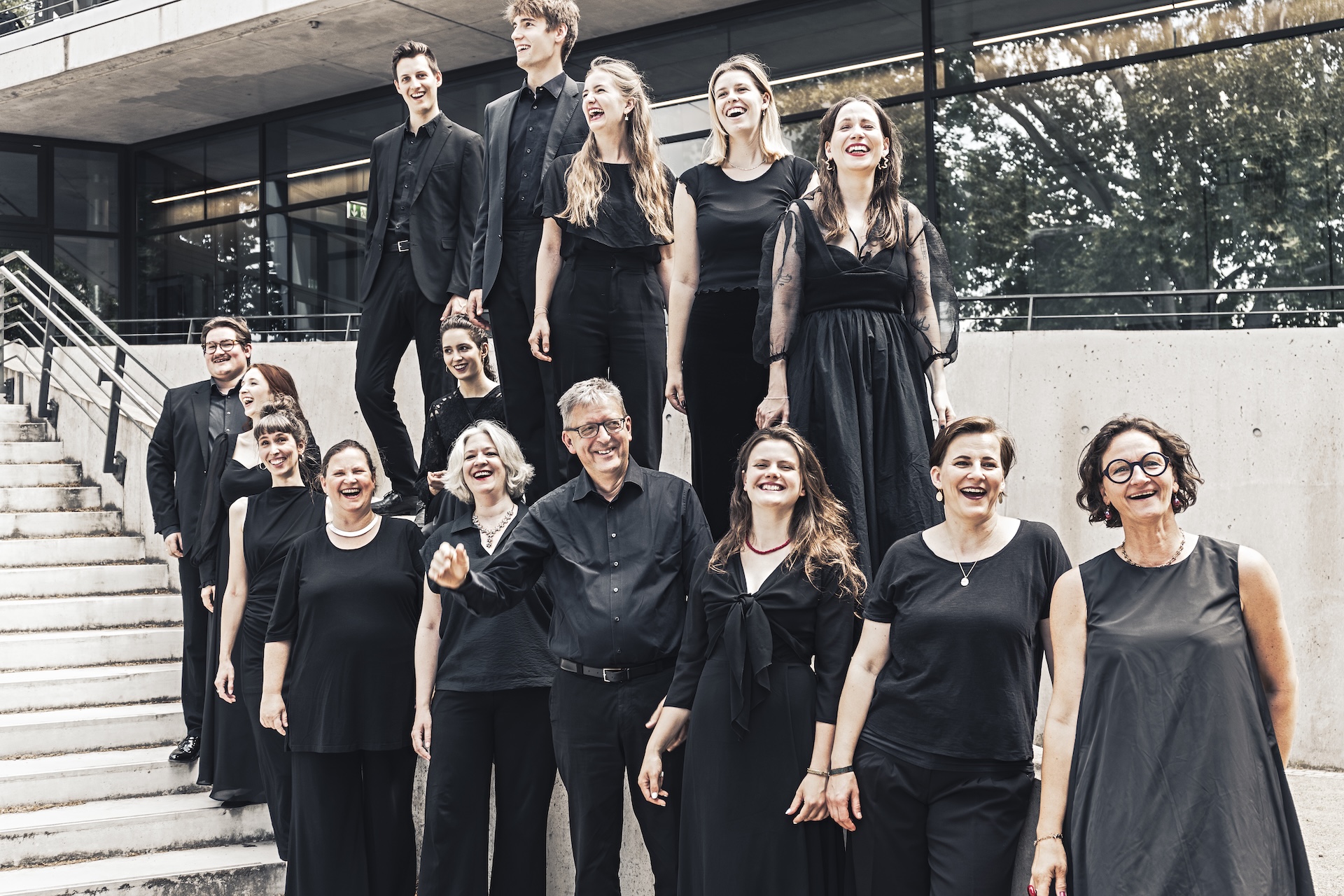
Dresdner Kammerchor /DE/
The Dresdner Kammerchor is one of the leading choirs in Germany. Since its foundation in 1985 by Hans-Christoph Rademann, it has become firmly established on the German and European musical scenes. With initiatives such as the first complete recording of Heinrich Schütz and a continuing interest in researching and promoting the musical legacy of central Germany, the choir helps shape the cultural identity of this region, working internationally as an ambassador for Dresden and Saxony. In collaboration with the Dresdner Barockorchester and other musical partners, numerous works by Heinrich Schütz, Johann Adolf Hasse, Johann David Heinichen and Jan Dismas Zelenka have been rediscovered. The choir has been honoured with numerous prizes including the German Record Critics’ Award.
Alongside the oratorios and sacred works of Baroque masters such as Bach, Telemann and Händel, the choral-symphonic repertoire of the Classical and Romantic periods from Mozart via Mendelssohn to Brahms forms another main focus of the choir’s work. The Dresdner Kammerchor is also renowned for the performance of challenging a cappella literature from the 19th and 20th centuries by composers such as Max Reger, Alfred Schnittke, Ernst Krenek, Olivier Messiaen and Herman Berlinski.
The choir specializes in modern and contemporary music. This is reflected in numerous premieres, first performances, and new works commissioned by the choir. In 2009 Hans-Christoph Rademann and the Dresdner Kammerchor initiated the Dresden Chorwerkstatt fur Neue Musik. The choir was awarded the Ernst von Siemens Music Prize for its services to contemporary music.
The Dresdner Kammerchor has received broad acclaim on its numerous concert trips in and outside Europe, i.e. USA, South Africa, India and China. The choir also receives regular invitations to international music festivals of great reputation like the Rheingau Musik Festival, Oude-Muziek-Festival Utrecht, Festivales Musicales Buenos Aires, Bachwoche Ansbach and Händelfestspiele Halle and Göttingen.
Frequent co-operations with renowned orchestras and conductors from Germany and abroad underscore the reputation of the choir. Among the most famous are the conductors René Jacobs, Sir Roger Norrington, Ádám Fischer, Riccardo Chailly, Herbert Blomstedt and the ensembles Sächsische Staatskapelle Dresden, Gewandhausorchester Leipzig, The Orchestra of the Age of Enlightenment, Concerto Köln and Akademie für Alte Musik Berlin.
___________
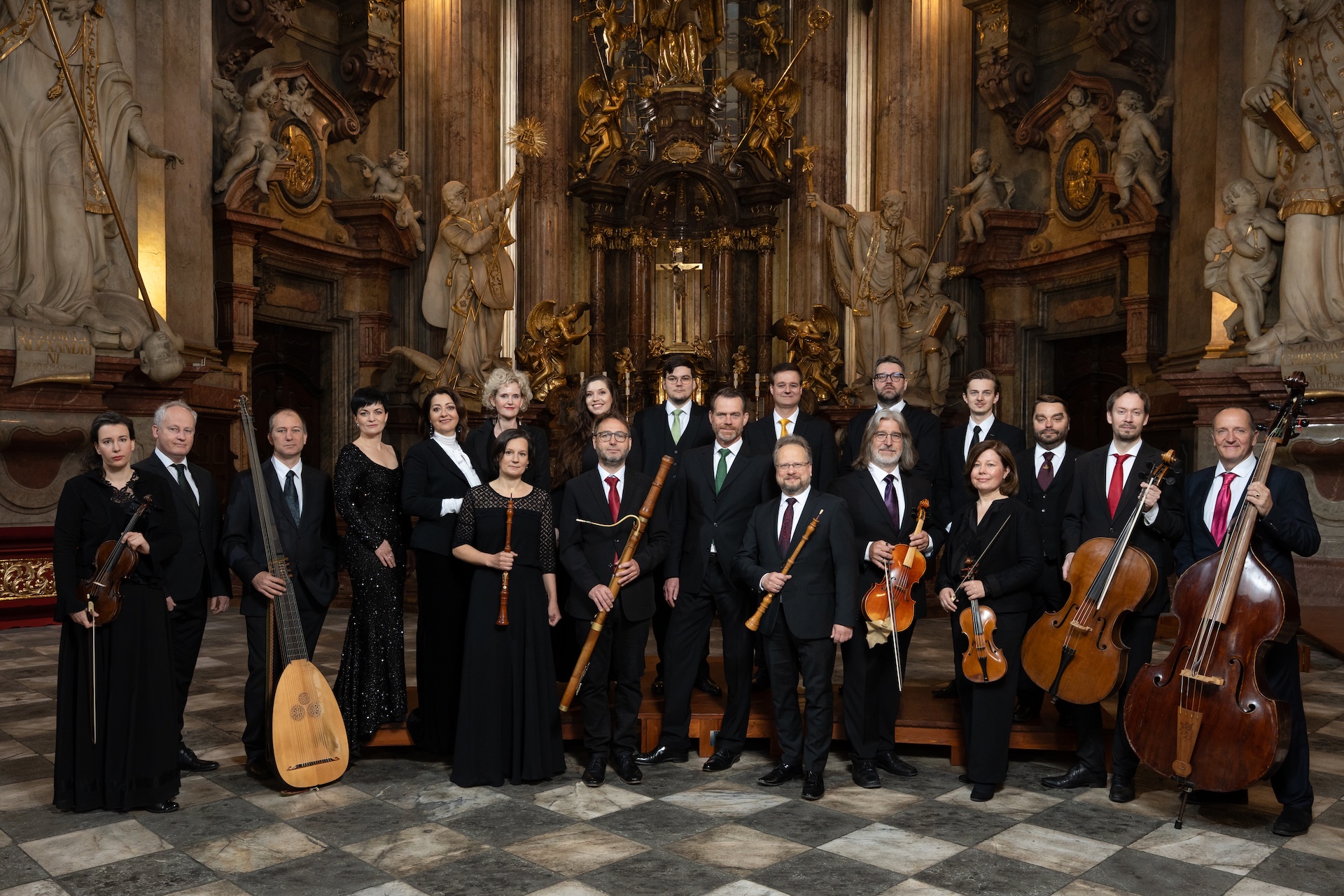
Ensemble Inégal /CZ/
Ensemble Inégal and its conductor Adam Viktora earned international acclaim thanks to its highly praised concerts and awarded CD-recordings, thus becoming synonymous with the rediscovery of the legacy of the ingenious Czech baroque composer Jan Dismas Zelenka.
The interpretative range of the highly versatile Ensemble Inégal spans from renaissance to contemporary music. In addition to early music, the ensemble has on its account innovatory performances and recordings of romantic (Dvořák, Rossini) and contemporary music (Britten, Pärt, Schnittke, Glass). Ensemble Inégal has performed at prestigious European festivals such as the Prague Spring Festival, Musica Antiqua Brugge, Oude Muziek Utrecht, Lufthansa Festival London, De Bijloke Gent, Stockholm Early Music Festival, Bachfest Leipzig, and many others. Ensemble Inégal has recorded 20 successful CDs earning a range of prestigious international awards (Diapason d’Or, IRR Outstanding, Goldberg 5 stars, a.o.). The ensemble is regularly featured in broadcasts of television and radio stations (BBC, EBU, Czech Television, Czech Radio, Deutschlandradio Kultur a.o.).
___________
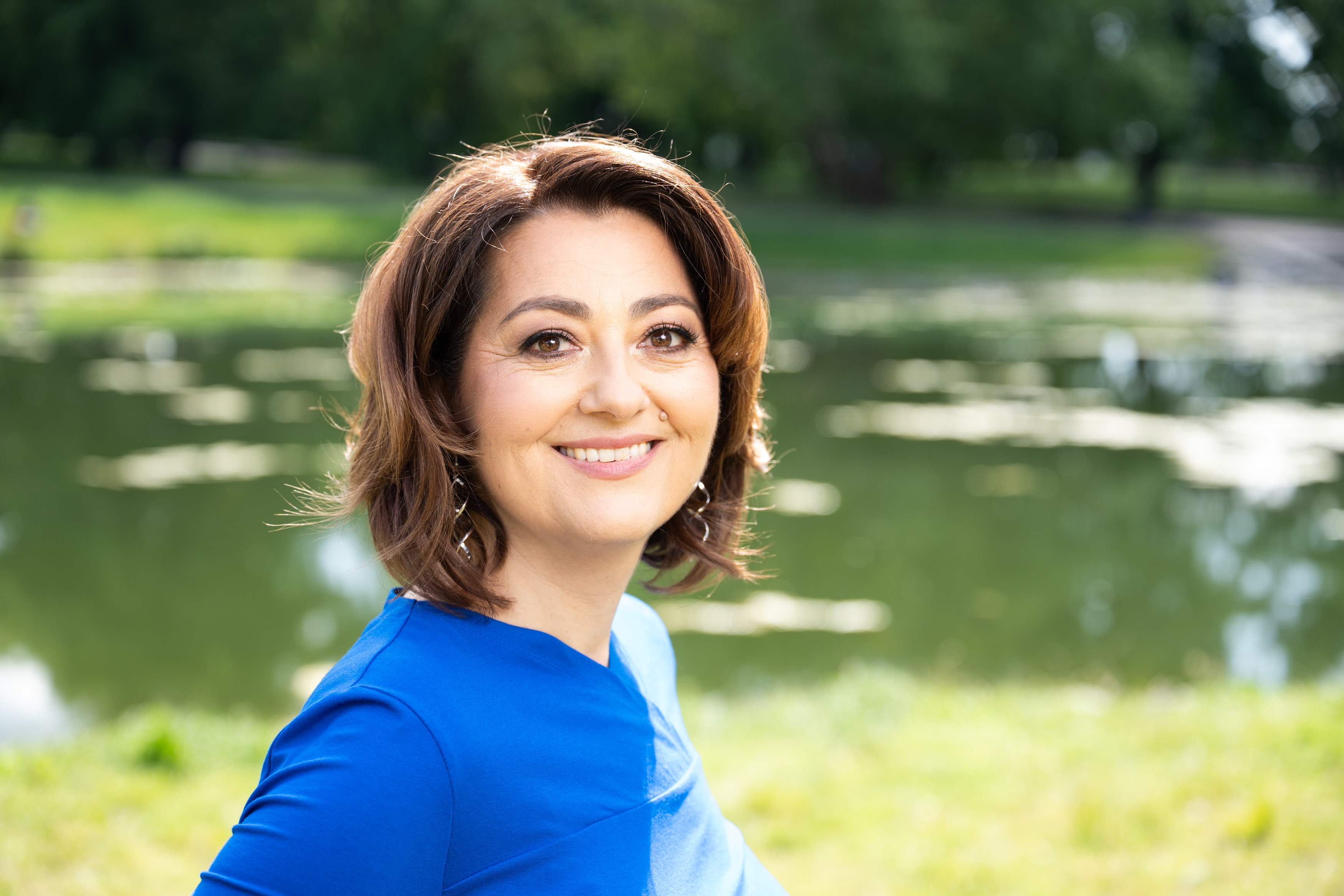
Gabriela Eibenová /CZ/
After graduating from the Prague Conservatory, studying privately in London, and participating in countless international performance seminars, soprano Gabriela Eibenová has focused primarily on concert performances and the interpretation of early music. She is the winner of the Anglo-Czechoslovak Trust music competition in London and a finalist in singing competitions in Karlovy Vary, Trnava, and Great Grimsby (UK). She has performed alongside renowned artists such as Eduardo Lopez Banzo, Ian Partridge, Simon Standage, Evelyn Tubb, Magdalena Kožená, Peter Kooij, Carlos Mena, Filippo Mineccia, Jean Tubery, and many others. She has performed several title roles in Baroque operas both in the Czech Republic and abroad: J. Blow—Venus and Adonis, J. M. Leclair—Scylla et Glaucus, C. Monteverdi—Il Combattimento di Tancredi e Clorinda, H. Purcell—Dido and Aeneas (a production that was named “Performance of the Year” in the Czech Republic and won the Alfréd Radok Award). Director Alice Nellis filmed a documentary about her for Czech Television. Together with organist and conductor Adam Viktora, she founded the vocal-instrumental ensemble Ensemble Inégal, whose primary focus is promoting the musical legacy of the Czech Baroque composer Jan Dismas Zelenka. With this ensemble, she performs extensively at major international music festivals (Prague Spring, Oude Muziek Utrecht, Tage Alter Musik Regensburg, Musica Antiqua Brugge, Bach Festival Riga, International Music Festival Santander, Lufthansa Music Festival London, Stockholm Early Music Festival, and others). She has performed throughout most of Europe, as well as in Israel, Lebanon, and Japan. She has appeared as a guest artist with, for example, the Czech Philharmonic, Südwestfunk Freiburg, and the Orquesta Barroca di Sevilla, and in opera productions at the Prague State Opera and the J. K. Tyl Theater in Pilsen. She has more than 40 CD recordings to her credit. She furthered her education by studying Theory and Performance Practice of Early Music at Masaryk University in Brno and Historical Vocal Interpretation at the Janáček Academy of Music and Performing Arts. She is frequently invited to serve as a vocal instructor at seminars focused on the interpretation of early music (at the conservatories in Olomouc, Pilsen, and Prague).
___________
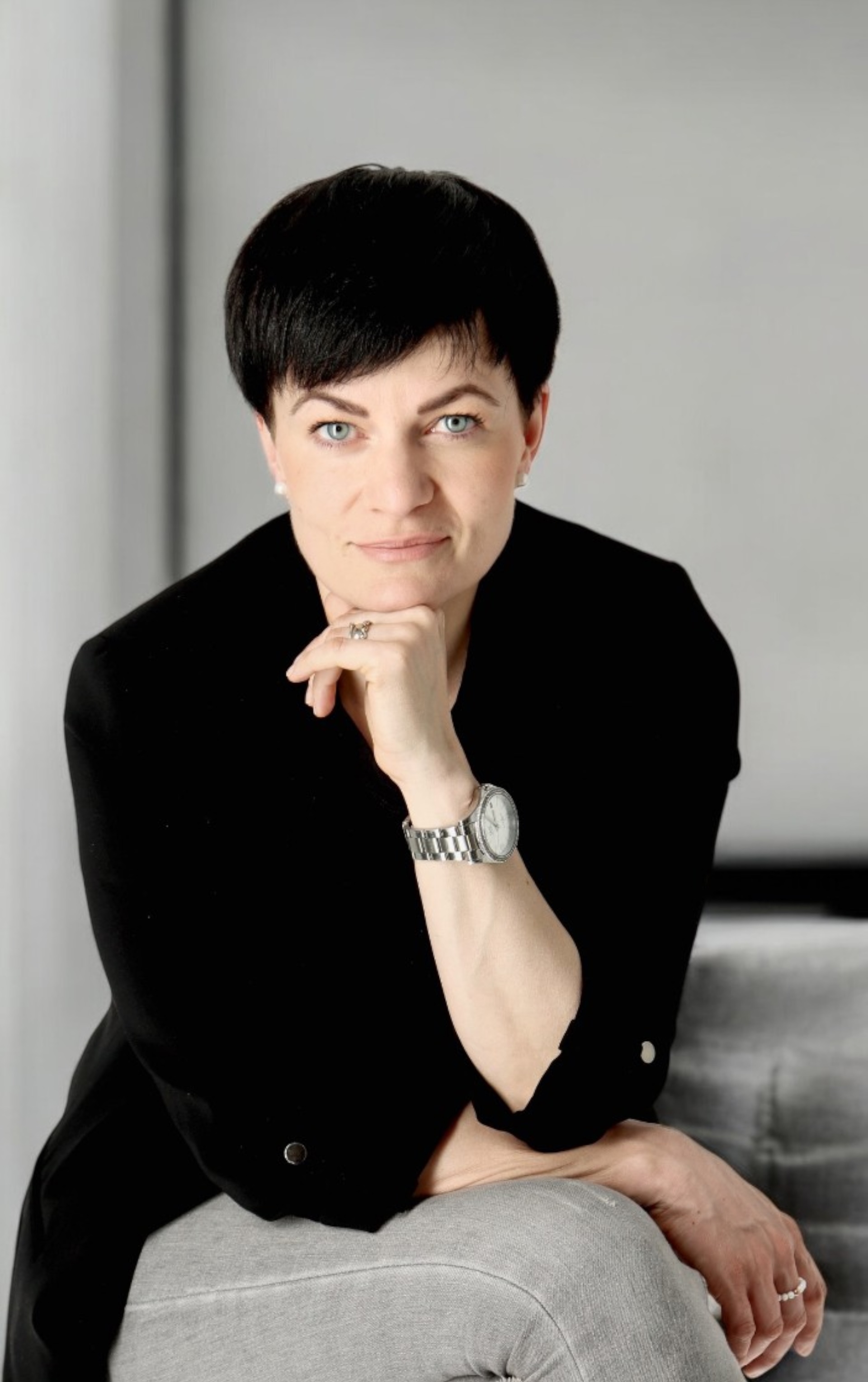
Lenka Cafourková Ďuricová /CZ/
Soprano Lenka Cafourková Ďuricová studied singing at the Janáček Academy of Music and Performing Arts in Brno under Professor Natálie Romanová-Achaladze. During her studies, she furthered her vocal training at master classes with Petr Dvorský, Gabriela Beňačková, and Regina Renzowá Jürgens. While still a student, she was selected in 2010 as a soloist for the prestigious “Morgenstern” concert for young talents in Vienna. A year later, she made her guest appearance at the National Theater in Brno as Pamina in the Czech fairy tale Papageno Plays the Magic Flute (based on Mozart’s famous opera). As part of her studies, she portrayed the role of Cinderella in Bohuslav Martinů’s Comedy on the Bridge, the role of Angelica in Giacomo Puccini’s opera Suor Angelica, and the role of Mařenka in Bedřich Smetana’s The Bartered Bride. She made her successful debut in this role in 2013 at the Moravian Theater in Olomouc, where the artistic director also offered her the role of Vendulka in another Smetana opera, Hubička (2015). Among her other successful opera performances, we should also mention the role of La Folie in the comic opera Platée by the French Baroque composer Jean-Philippe Rameau at the Znojmo Music Festival (2014). For this role, she was even shortlisted for the Thálie Award. Two years later, at the same music festival, she shone alongside Adam Plachetka as Zerlina in Mozart’s opera Don Giovanni.
Lenka Cafourková Ďuricová is also very active as a concert performer. She is a laureate of the Bohuslav Martinů Song Competition in Prague. She is also a sought-after performer of music by the Old Masters. Since 2011, she has been a regular collaborator with the Czech Ensemble Baroque (which specializes in period-authentic performances of music from earlier stylistic periods); since 2015, with the vocal-instrumental ensemble Ensemble Inégal; and, starting this year, with the Prague-based Baroque orchestra Collegium 1704. This year, she made her debut at the Prague Spring festival. Among her greatest artistic achievements is, above all, her concert tour in China (2016). The male vocal ensemble Q VOX unanimously selected Lenka Cafourková Ďuricová as the soloist for their new joint project titled “Christmas Dreams.”
___________
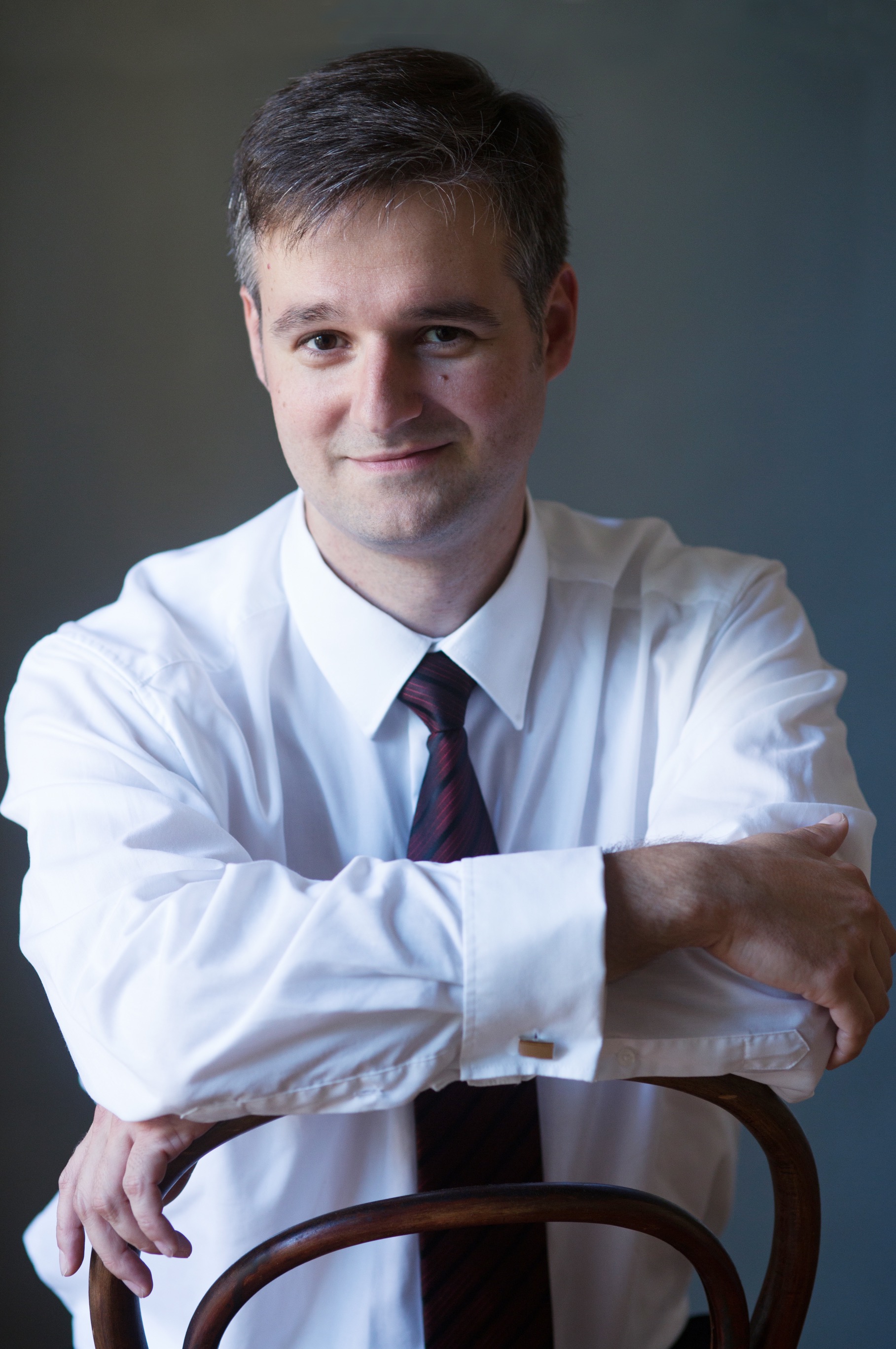
Tobias Hunger /DE/
The tenor Tobias Hunger began his musical training with the Dresden Choir of the Holy Cross and studied with Hermann Christian Polster at the University of Music Felix Mendelssohn Bartholdy in Leipzig. As an internationally renowned concert and oratorio singer he pays special attention to the music of the 17th and 18th century. He has sung repeatedly with famous ensembles, orchestras and under conductors such as Philippe Herreweghe, Georg Christoph Biller, Václav Luks, Hans-Christoph Rademann, Ludger Rémy, Wolfgang Katschner and Ludwig Güttler. In addition to the entire vocal works of Johann Sebastian Bach his repertoire ranges from works of the Renaissance, the Baroque to Classical music and goes through to the 20s and 30s as well as the modern. So he performed successfully at the Munich Biennale in the piece L’Abcence of Sarah Nemtsov as RABBI. In the field of opera he sang further roles like PAOLINO (The secret marriage), CARAMELLO (A Night at Venice), DON OTTAVIO (Don Giovanni), FERRANDO (Così fan tutte), ACIS (Acis and Galatea) and BASILIO/DON CURZIO (Le nozze di Figaro). Tobias Hunger visited masterclasses with Peter Schreier, Scot Weir, Gerd Tuerk, Eva Randová and the King’s Singers.
___________
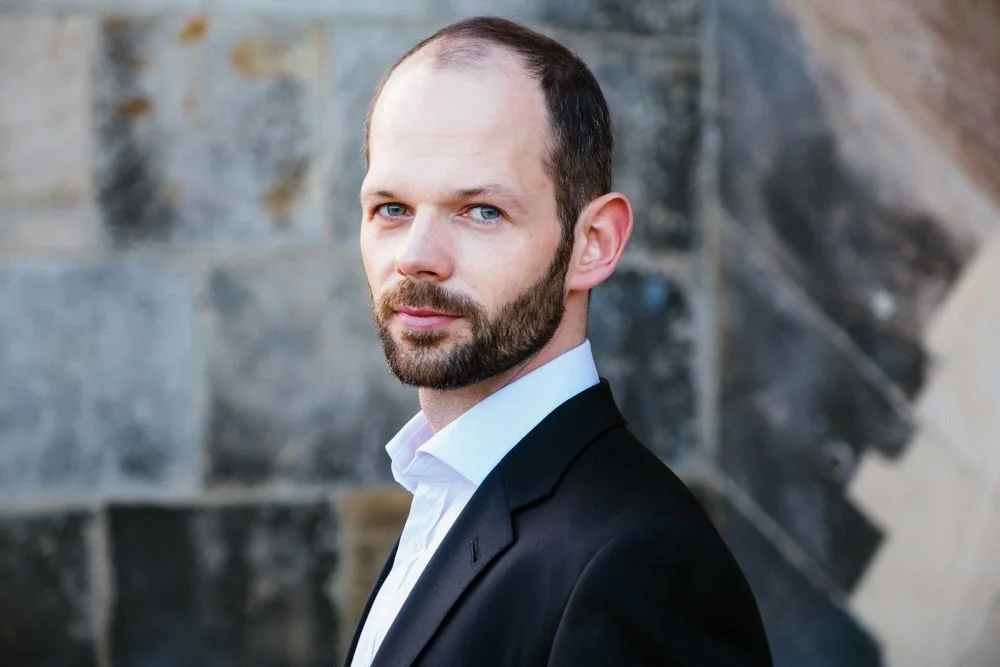
Martin Schicketanz /DE/
Baritone Martin Schicketanz is primarily active in the broad field of early music and works as a sought-after soloist with renowned ensembles such as the Internationale Bachakademie Stuttgart, the Rheinische Kantorei, the Collegium Marianum, the Baroque Orchestra Wroclaw, Ensemble Inégal or the Collegium 1704 under Vaclav Luks and has performed throughout Europe at festivals such as the Gstaad Menuhin Festival (CH), BOZAR Festival (BE), Bachwoche Ansbach, Bachfest Leipzig, Resonanzen Wien (AUS), Musikfest Stuttgart, Early Music Festival Stockholm (S), Abendmusiken Basel (CH) or the Telemann-Festtage Magdeburg. A close collaboration connects him with Hans-Christoph Rademann. He is thus involved in the recording of the complete works of Heinrich Schütz by the Dresdner Kammerchor, which is scheduled for completion in 2018, and regularly performs further bass parts—most recently Die Auferstehungshistorie by Schütz and Christ lag in Todesbanden by Bach. At the 2019 Leipzig Bach Festival he sang the bass part in the re-performance of Stölzl’s Passion Ein Lämmlein geht und trägt die Schuld under Hermann Max in the Thomaskirche. A recording of the concert is released by CPO in 2021. In December 2019 he made his debut at the Leipzig Gewandhaus with Bach’s Christmas Oratorio Parts I–VI under Gregor Meyer. In the anniversary year 2020 he sang Minister Don Fernando under Jos van Immerseel in Beethoven’s opera Fidelio at the NFM Breslau. With his solo vocal ensemble Ælbgut he recorded the 2nd version of Bach’s St. John Passion for Coviello Classics in an entirely soloistic formation. The CD has received excellent reviews in various publications and won the OPUS KLASSIK 2020. Also with Ælbgut, Bach’s B Minor Mass was broadcast live as the final concert of the Bach Festival Leipzig 2020 in a corona-limited setting with only 5 singers and 12 instrumentalists. As baritone of the Prague-based ensemble Cappella Mariana, he also dedicates himself to Renaissance polyphony. Martin Schicketanz studied in the lieder and concert class of the HfM Dresden with Christiane Junghanns and KS Olaf Bär.
___________
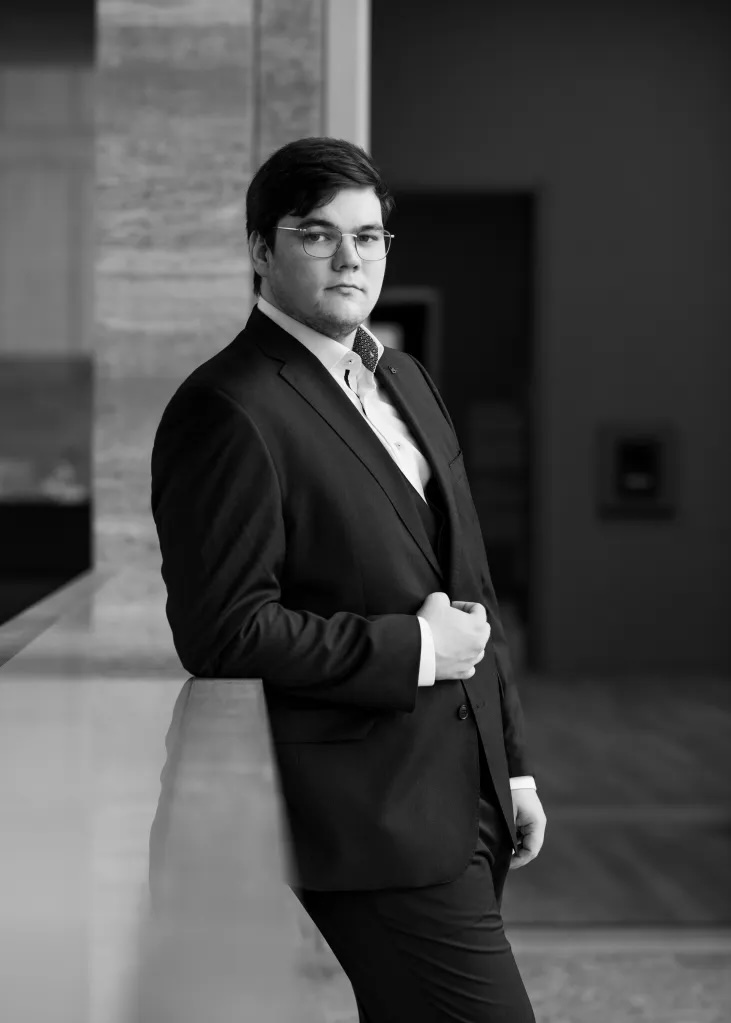
Jonathan Mayenschein /DE/
German countertenor Jonathan Mayenschein began taking singing lessons at the age of six with Kai-Rouven Seeger. He was a member of several choirs, including the Aurelius Sängerknaben in Calw and the Cantus Juvenum in Karlsruhe, both under the direction of Hans-Jörg Kalmbach. During his time with Cantus Juvenum in 2007, he became the first boy to perform in a production of Mozart’s The Magic Flute at the Badisches Staatstheater Karlsruhe.
At eleven, he joined the renowned Windsbach Boys Choir (Windsbacher Knabenchor) under the direction of Karl-Friedrich Beringer, participating in nearly 400 concerts until his graduation (Abitur) in 2015. Concert tours to the USA, China, and across Europe rounded out his musical training. One highlight was a solo concert at Amsterdam’s Concertgebouw, where he performed Benjamin Britten’s A Ceremony of Carols, accompanied by harpist Xavier de Maistre.
The end of his time in Windsbach marked the beginning of the newly founded ensemble Sonat Vox, composed of former members of the Windsbach Boys Choir. Under the direction of Justus Merkel, he has held the position of first countertenor since its inception. Currently, he is a member of the Dresdner Kammerchor (conducted by Hans-Christoph Rademann) and the Gaechinger Cantorey (conducted by Hans-Christoph Rademann).
___________
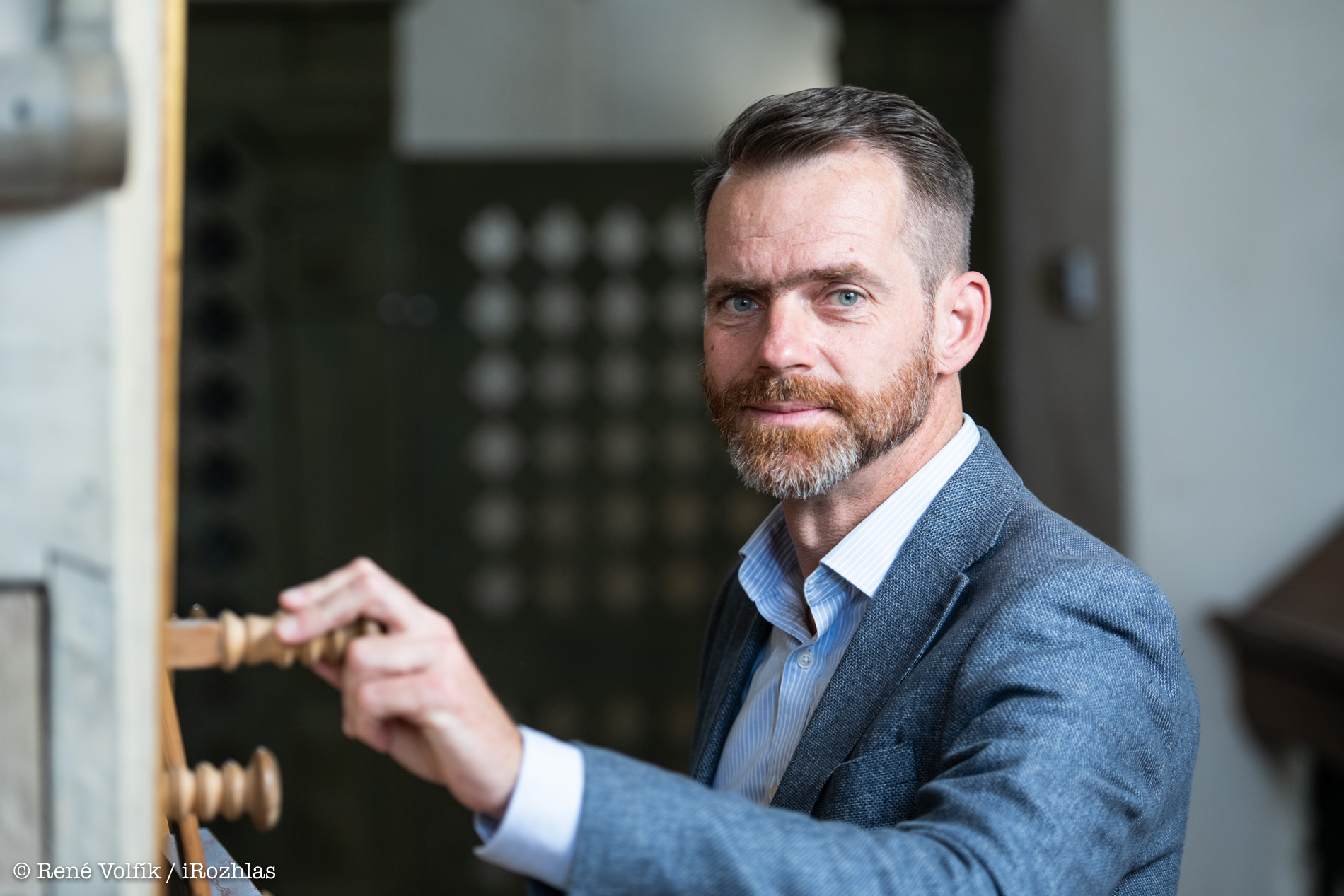
Adam Viktora /CZ/
Organist and conductor Adam Viktora performs at music festivals throughout Europe, lectures and performs at international organ congresses, serves as an advisor on expert committees for the restoration of important historic organs, and records for European radio and television stations. He takes a great interest in historic organs and in activities aimed at their preservation and promotion. He is the founder and artistic director of the Czech Organ Festival. He teaches organ at the Conservatory in Pilsen and historically informed performance at the Academy of Performing Arts in Prague. He is the artistic director of the Ensemble Inégal and the Prague Baroque Soloists, with whom he has recorded over 20 award-winning CDs and given countless concerts at major European festivals such as Prague Spring, Oude Muziek Utrecht, Musica Antiqua Brugge, Lufthansa Festival London, Bachtage Leipzig, Tage alter Musik Regensburg, Stockholm Early Music Festival and others. Adam Viktora has also become a prominent figure in the process of rediscovering the work of the Czech Baroque genius, Jan Dismas Zelenka. He founded and organizes the Zelenka Festival Prague – Dresden and hosts the annual musicological colloquium Zelenka Conference Prague. Together with Ensemble Inégal he has won the prestigious French Diapason d’Or award four times.
